Write the Big Moment Big

[In honor of The Godfather’s 50th anniversary, here’s one of my favorite Top Ten posts of the past.]
I have a friend who runs a very successful literary agency in Los Angeles. She represents screenwriters. I asked her once, “Is there any single mistake your writers make, not in business or marketing, but in the writing itself?”
She replied without hesitation,
“When they come to the Big Scene, they chicken out.”
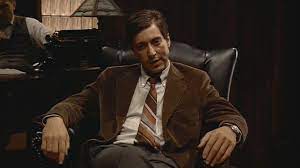
I asked her to elaborate.
“Think about the ‘She’s my sister, she’s my daughter’ scene in Chinatown. Or the moment in The Godfather when Michael says, ‘If Clemenza can figure a way to have a weapon planted for me … then I’ll kill them both.” Those are Big Moments. Both are central to their dramas. And in each one, the writers and directors held nothing back. They didn’t under-write. They didn’t underplay. And both those moments are immortal.”
My friend said that her writers (and by extension, of course, all of us) tend to be risk-averse in their stories’ Big Moments.
“Partly I think it’s because they’ve been told that subtext is more powerful than text. Or they’re afraid that if they go balls-out for emotion and the moment doesn’t work, they’ll look foolish. So they deliberately under-write. They back off from having Carmela scream at Tony, ‘I was in love with Furio!’ Or from Tony slamming his fist through the wall two inches from Carmela’s face.”
My friend said she routinely has to force her writers to revisit their Big Moments and be brave enough to take the risk of really going for it.
I confess when I heard that, my blood ran a little cold.
I thought, “Am I doing that?”
And of course I am. And for the same reasons my friend cited.
Memo to self: Don’t chicken out next time. Write the Big Moment big.
DO THE WORK
Steve shows you the predictable Resistance points that every writer hits in a work-in-progress and then shows you how to deal with each one of these sticking points. This book shows you how to keep going with your work.

THE AUTHENTIC SWING
A short book about the writing of a first novel: for Steve, The Legend of Bagger Vance. Having failed with three earlier attempts at novels, here's how Steve finally succeeded.
NOBODY WANTS TO READ YOUR SH*T
Steve shares his "lessons learned" from the trenches of the five different writing careers—advertising, screenwriting, fiction, nonfiction, and self-help. This is tradecraft. An MFA in Writing in 197 pages.
TURNING PRO
Amateurs have amateur habits. Pros have pro habits. When we turn pro, we give up the comfortable life but we find our power. Steve answers the question, "How do we overcome Resistance?"
In our work or our life, we have only a moment. Make it big all. I’m in the wilds of West Virginia preparing to hike in the mountains of the Dolly Sods. Big, big mountains. No chickening out. Wish you all a day this week where you take the chance to go all in.
Good luck Jackie. I went down the John Muir Trail a few years ago and the experience significantly changed me for the better. I just read about the Dolly Sods – impressive and beautiful.
I’m in WV now too, a few miles from Dolly Sods. This is a great weekend to explore Davis & Thomas too!!
Oh, also, great post Steve! As usual 🙂
Hi Steven, I can’t stand it anymore. The rejections, the indifference, the silence… 12 years of that, I’m at an absolute excruciating rock bottom right now and no amount of self motivation seems to be helping. I’ve always been pro active and positive, but now the pain is just unbearable. Sorry it’s not much and quite negative, but that’s all I can say right now. Thank you Steve.
I think the trick to this is letting the character take over. Let them do what they want and say what they want. Which I’ve often found surprises me. They are willing to go all out when thinking instead of how this scene fits into that or echoes/calls back/foreshadows another. My mind is on the writing whereas the character’s is on the task at hand. As a bonus, if a character does something they would do, but you say, No, I need you to do this instead, then the problem is in you, not the character.
In my debut novel, A Killer Story (told in first person), my hardest decision was to have my daughter kidnapped and put in danger. I wrestled with doing it and asked her about it. I asked her if it was creepy for her dad to write that she was kidnapped and to use her in that way in my book. I thought she might say to leave her out of it. But she said, “Dad, it’s only a book.” So I put her in and had her kidnapped. Went big when it mattered for the story. She survived, of course!
I write songs. I cue i. On the best line(s) for the chorus. That’s where the high point is.
“I cue in on”
Be more foolish, Kate. Be brave. Be authentic. My thoughts today! Thank you, Steve!
Great repost, Steve.
And Stephen Power– I like your line: “I think the trick to this is letting the character take over… They are willing to go all out.”
I’m knee-deep into a re-read of Shaun’s “The Story Grid,” as I plot my fourth novel. Highly-recommended tool, BTW: https://blackirishbooks.com/product/the-story-grid/
I think Shaun would nod at Stephen’s comment above. If we are disciplined enough to use “The Story Grid” methods– the “complications” in our stories have to increase… The “payoff” has to be big, meaningful. If we properly plan our work–still leaving room to “wing it” and be creative– we have little choice but to write the Big Scene at the end.. and as Stephen said, “Let the characters… go all out.”
Brilliant and correct observation.
We fear what has to happen just at the moment it MUST happen.
I’m in the middle of revisiting a couple of key moments in my musical.
They need to be bigger.
Re-write!
Thanks again for helping us to move ever forward.
That’s really interesting. I was thinking about Tarantino’s work earlier today – and how he LOVES the big scene!
Thank you dear Steve, Kate, and all friends here.
You just can’t read fundamentals often enough.
There is a scene in my book where the “flesh&bones” of a God attack the immense existence of another. As a concept it is So Big, but my conscience just can’t accept it, for a long time now. Maybe it tells me that I can’t downsize the levels of Gods as concepts, giving them human traits. On the other hand, nothing stopped Homer i.e. from turning the energies of Gods into simple, strong human beings. And it was perfect somehow. Filtering through your post, I would assume that there is a deeper level of the concept of Big, that one must find when reaching those peak moments. A Big that is big because it’s so different, so unique, and not so extravagant. Still wondering.
Or maybe I just chicken out even subconsciously, stopping the very “attack” by giving lower-than-hell effects on the causes. Gosh!
Steve, I don’t think you’ll ever get around to responding to this comment, but I’ll ask anyway: Is there a particular scene you wrote in the past where you feel you chickened out? I’d love to re-read that scene and see if I as a reader can spot it or not.